
What the EF? How to Support Working Memory
A guide for parents, partners, relatives, friends, and professionals supporting ADHDers. Part of the What the EF? Executive Functioning blog series
Companion blog: What the EF? Understanding Working Memory
Before we begin, if you haven’t already read our companion blog, we recommend doing so first and then returning here.
Why This Matters
If you’re supporting an ADHDer with working memory challenges, you’ve likely felt frustrated at times. You might notice things like:
Important items getting lost
Needed items being forgotten when leaving the house
Tasks not being completed
Bills not being paid on time
Birthdays or anniversaries being missed
Commitments not followed through on
Conversations not being remembered later
These moments can impact relationships, trust, and increase the mental load for the supporter. It’s important to remember that ADHDers usually feel just as frustrated with themselves when these things occur.
While our instinct may be to respond with reminders or lectures, these responses often increase shame without actually improving memory. In most cases, ADHDers aren’t forgetting because they don’t care or aren’t paying attention; the challenge is that their brain struggles to hold and retrieve information on demand.
A Quick Refresher: What’s Actually Going On
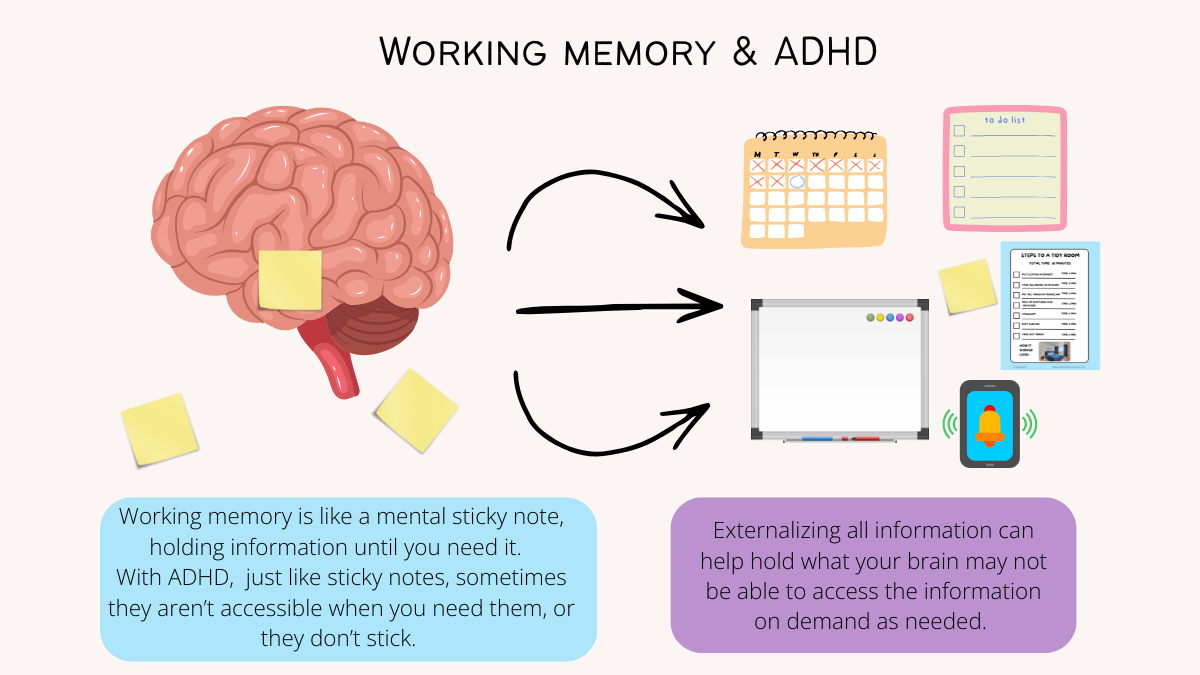
Working memory is like a mental sticky note; it temporarily holds information until you need it. For ADHDers, attention, focus, and time awareness differences can make this “sticky note” inconsistent.
Key points:
Being unable to recall something at the right moment is not linked to importance.
Brain games and memory exercises don’t reliably improve working memory in daily life.
The most effective support comes from externalizing information—using tools and cues to store or prompt information when needed.
What Actually Helps: Externalizing
Externalizing is the primary strategy to support working memory. It shifts the task from “remembering internally” to “holding information externally.”
Examples include:
Using shared calendars instead of relying on verbal plans
Taking notes on discussions or instructions
Creating visual cues (notes, whiteboards, strategic item placement)
Setting alarms or timers for time-based tasks
Keeping important items in consistent, visible locations
Using visual checklists for recurring tasks (morning/evening routines, chores)
Tips for checklists:
Create them digitally, then print and place them where needed
Laminate them and use dry erase markers for checking off progress
Many apps can help, but the person still needs some sort of cue to check the app
Key: For cues to work, they must appear at the place and time of use, which takes thinking through and identifying the appropriate cue for each individual scenario.
Adjusting Expectations: Moving Away from “Should”
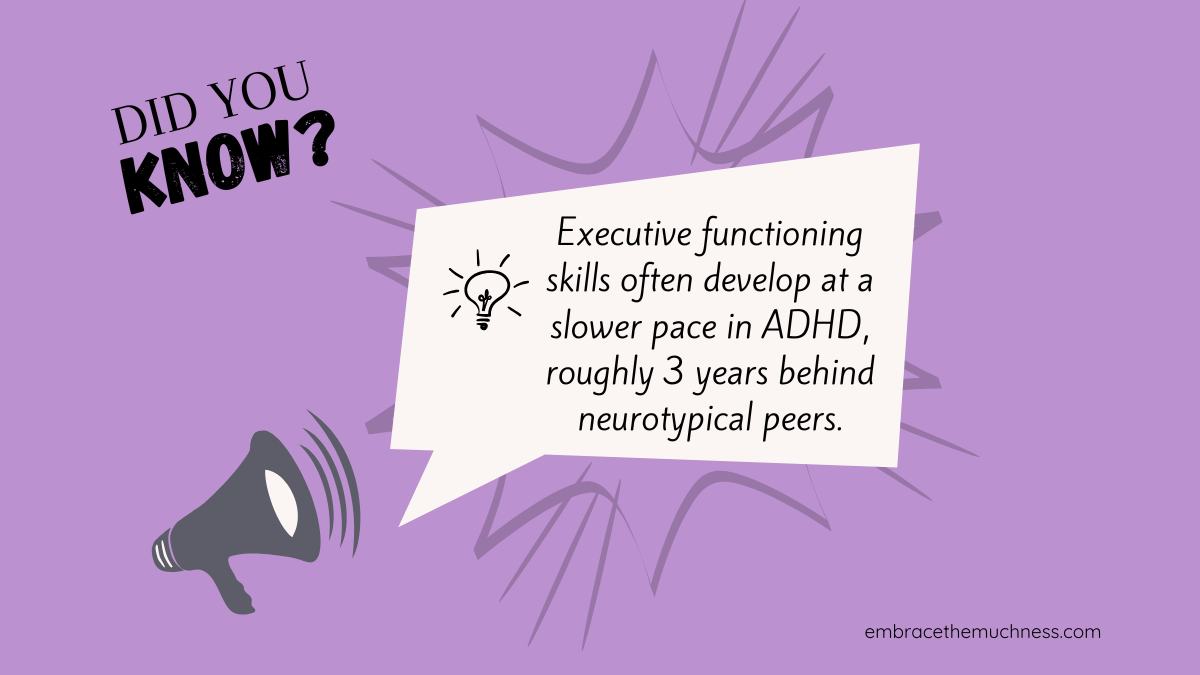
Working memory develops throughout childhood and into early adulthood, even in neurotypical brains. ADHDers often develop executive functioning skills on average about three years later than neurotypical peers, so expectations may need to shift.
A 2nd grade ADHDer may have memory skills similar to a kindergartener. This isn’t a lack of effort, it’s just how their brain works.
Young children can often hold only one step of a task at a time; teens are still developing this capacity as well.
Adults newly diagnosed with ADHD may need time to integrate their new self understanding and strategies they are just now learning. When you’ve done something one way for 50 years, that doesn’t change overnight.
Gifted individuals may excel in certain areas, giving the impression of advanced abilities, but they can still experience delays or challenges in executive functioning compared to their peers.
Instead of thinking, “They should remember this”, try reframing to:
“What supports will help them complete this?”
Supports might include:
Giving directions one step at a time
Writing down a task list
Using visual reminders or lists (especially for younger children or pre-readers)
External reminders like alarms or notifications
The Paradox: They Have to Remember to Use the Strategy
All strategies to manage working memory issues require the the person with memory issues ot remember to use the strategy! Given this,there will be moments where they will forget to utilize strategies. Early on, ADHDers will need support, repetition, and collaboration to build this skill.
Collaborative approaches include:
Setting up reminders together in the moment
Creating systems ahead of time rather than during stress
Checking in with curiosity instead of correction
“Just set a reminder” isn’t as simple as it sounds, when you have to actively think through exactly when, where and what form of reminder would be best. This requires using other challenging executive functioning skills as well.
Shifting from Frustration to Collaboration
Support doesn’t mean taking over everything. Begin by assessing the level of independence the person currently has:
Complete support needed
Some support needed
Independent
Once the level is clear, work together to gradually increase independence, keeping expectations developmentally appropriate and personalized to individual capacities.
Remember: Complete independence isn’t going to be achievable for all, consider the individual’s needs and disabilities.
Simultaneously, the mental fatigue that supporters feel in taking on a supporter role is very real, using many of these strategies yourself can help reduce your mental load as well.
Your Role: From External Cue to Coach
Early on, you may act as the external cue, giving reminders and prompts:
“Do _____ now”
“Bring ____ with you.”
“You have a doctor’s appointment today at 3:00pm”
“Don’t forget to pick Sally up after school.”
“Send your friend a happy birthday message today.”
Over time, shift into a coaching role, prompting the ADHDer to use their executive functioning toolbox while providing scaffolding as needed.
Coaching Prompts That Support Working Memory (Without Taking Over)
“What tasks are you needing to complete today?”
“What’s the next step you want to take?”
“Do you want to jot that down so you don’t have to hold it in your head?”
“Where could you put that so you’ll find it later?”
“Is there a strategy or tool that might help here?”
“What were you in the middle of before that interruption?”
“What’s worked for you before in situations like this?”
“How involved do you want me to be…thinking partner or just a quick nudge?”
Final Thoughts
Working memory challenges are one of the most frustrating aspects of ADHD—for both the individual and their supporters. Understanding that it’s a difference in brain functioning, not intentional behavior or lack of care, and adjusting expectations accordingly, is key.
By using external supports, collaborative strategies, and coaching prompts, you can help the ADHDer develop skills while reducing the mental load for everyone involved.
Bobbi-Jo Molokken
ADHD Coach & Educator | Embrace the Muchness
*Be sure to check out all other blogs in our What the EF? Executive Functioning Series