Neurodiversity for Teen Girls: Who This Book Helps (and Why)
This post contains affiliate links. I may receive a small commission if you purchase through these links—at no additional cost to you. This helps offset the cost of reviewing and sharing quality resources.
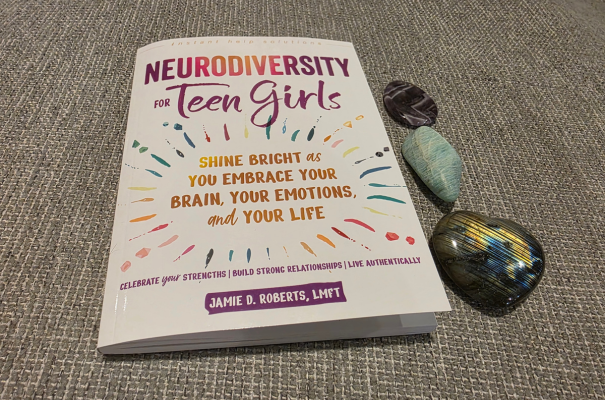
If you’ve been searching for books for autistic, ADHD or otherwise neurodivergent teen girls, or wondering how to better support a neurodivergent teen in your life, this is one worth paying attention to. I’m genuinely glad this book exists for today’s teens. I’m both a psychotherapist and ADHD coach who was diagnosed with ADHD in adulthood, and I’m also a parent of two neurodivergent girls (one of whom is a tween). While reading Neurodiversity for Teen Girls, I couldn’t help but think about how meaningful a resource like this would have been for my younger self. Teenage me, who didn’t yet know she had ADHD, would have deeply valued seeing her experiences reflected and validated. This book offers exactly that.
A Book That Helps Teens Feel Seen
At its core, this book offers something many neurodivergent teens are missing: validation and understanding.
When I asked author, Jamie Roberts, LMFT what she most hoped readers would take away, she shared:
“I hope they take away that there is no one way to do anything… the purpose is to figure out what specifically works for her. I hope she feels seen and understood in a new and deeper way.”
That intention comes through clearly. The book introduces a neurodiversity-affirming lens that helps reframe the negative, pathologizing narratives that so many teens internalize about their neurodivergent traits.
And that kind of reframing, particularly during adolescence, when you are already trying to figure out who you are in this world, can be powerful!
The “Gem” Profiles: Why They Work
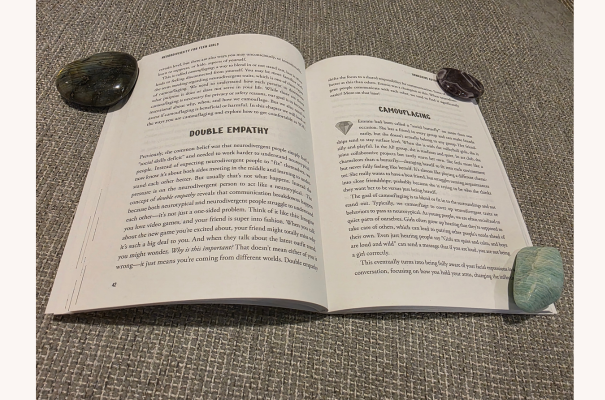
One of the most engaging parts of the book is the profiles of each “gem”: stories that reflect different individual neurodivergent experiences.
These aren’t just examples. They’re mirrors. When I asked Jamie what inspired them, she explained:
“Neurodivergent brains tend to enjoy stories and examples… I opened my folder of cards, letters and notes from previous clients… I looked up and saw a bowl of crystals. It all clicked into place—every client I have worked with is a special unique gem, as is every teen girl that will read this book. I wanted her to see herself in the book.”
That intention is felt throughout. The stories help translate overall concepts into lived, emotional experiences that many neurodivergent teens connect with far more easily than purely informational text. They will hopefully see some aspects of their own experiences represented within one or more of the “gems”.
What This Book Helps Parents Understand
If you’re a parent, this book doesn’t just explain neurodivergence, it helps you more clearly know what that experience may feel like. And maybe more importantly, it offers reassurance.
When I asked Jamie what she wishes more parents understood about their neurodivergent teen’s experience, her answer was simple and grounding:
“They are going to be ok. The path may be different, the timing may be different, the supports may be different… but they will be ok.”
That message matters. So many parents I work with are holding fear: about the future, about independence, about whether their child will “be okay” in this world. This book hopefully allows any parent who might read it to see that while their child may have struggles in a world that wasn’t built for their neurotype, it also offers hope and insights into what helpful support can look like.
Who This Book Is For
I’ll be recommending Neurodiversity for Teen Girls to a wide range of people:
Neurodivergent teens — to see themselves reflected, understand their own experience more, and recognize they’re not alone
Parents of neurodivergent teens — to better understand their child’s inner world and become acquainted with how they can best support them
Adult women with ADHD or late diagnoses — as a way to reconnect with and support their younger selves
Therapists, educators, and professionals — as an accessible, affirming introduction to neurodiversity
Despite the title, the book is also inclusive of non-binary teens, features diversity and reflects a broad range of experiences.
Why This Book Stands Out
There’s actually a huge gap in resources that are actually directed specifically at neurodivergent teens, particularly affirming ones. And while the target audience is directed at teens, almost any reader could take something away from it.
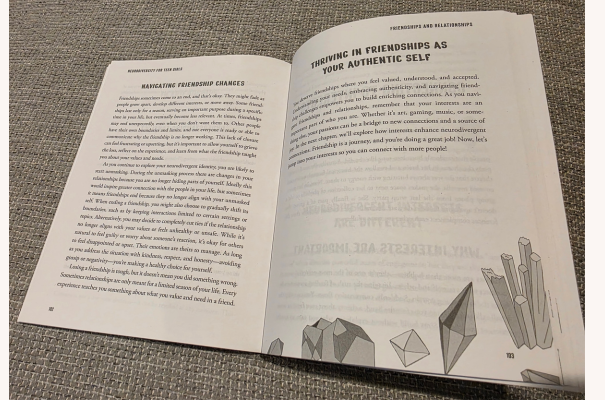
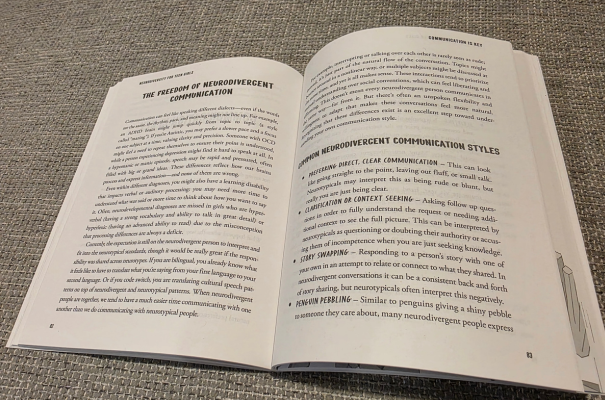
It’s an easy read, with a pleasant visual layout. The language is clear, engaging, and accessible. It goes beyond just ADHD and autism, offering a broader look at the entire neurodiversity umbrella, something that’s often missing in similar books.
About the Author
Jamie Roberts, LMFT is a licensed marriage and family therapist who specializes in supporting neurodivergent teens. She is the owner of Equilibrium Counseling and the founder of Neuropebble, a platform that hosts professional development training focused on supporting neurodivergent clients, all led by neurodivergent clinicians. Jamie identifies as AuDHD (ADHD + Autistic) and dyslexic. She’s the face behind @neurodivergenttherapist on several social media platforms. Her blending of lived and clinical experiences are evident throughout the book. She is also the author of Mindfulness for Teen Anxiety.
Final Thoughts
I’ve already purchased a copy for my own tween, added one to my therapy office, and included it in the ADHD and neurodiversity resource lists I share with clients and families. It’s a book I anticipate recommending often and wish I would have had when I was a teen.
Bobbi-Jo Molokken
ADHD Coach & Educator | Embrace the Muchness
Get the Book Here: If this sounds like a good fit for yourself or someone you know, you can find Neurodiversity for Teen Girls here: https://amzn.to/3R9MYmL
Looking for More Resources? I’ve put together a curated list of ADHD and neurodiversity resources including book and product recommendations: https://www.embracethemuchness.com/adhdresources