
Positive Notes for Kids: A 14-Day Connection Activity Parents Can Start Today
A low effort, high impact tradition to build self-esteem, strengthen connection, and help kids feel seen.
Parenting often involves a lot of correcting.
“Don’t touch that.”
“Sit still.”
“Stop interrupting.”
And when we’re stressed or exhausted, those quick corrections can turn into comments that hit much deeper…
“You’re so irresponsible.”
“You never listen.”
“You’re too much.”
Kids with ADHD are estimated to receive 20,000 more negative messages by age 10 than their neurotypical peers. Over time, that kind of feedback can shape how they see themselves… even when they’re simply being who they are.
We can’t parent perfectly. We’re going to get it wrong sometimes. But we can intentionally build in moments that remind our kids they are loved, valued, and seen.
A low-effort activity that makes a big impact
A few years ago, I saw a Valentine’s activity post from HR Mom that felt meaningful and actually doable… even with my own executive functioning challenges.

The Activity:
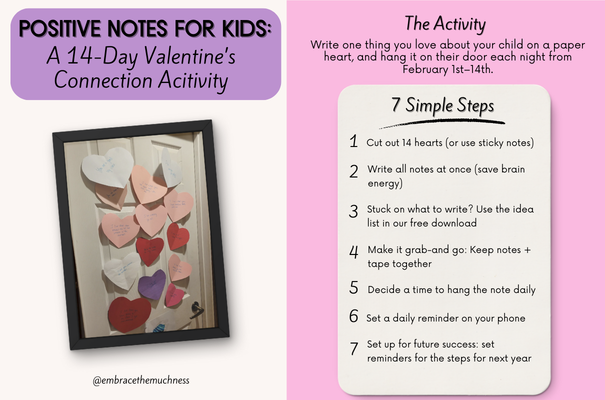
Write one thing you love about your child on a paper heart, and hang it on their door each night from February 1st–14th.
I did it that year and my kids loved it. They even left the hearts up well beyond February. The next year, I forgot all about it (because ADHD)… until my oldest asked about it. That’s when I realized how much it had mattered.
So I broke the steps down in a way that would actually work for me… and set the reminders I needed to follow through.
Steps to carry out this activity
1. Cut the hearts ahead of time (last week of January)
You can even have your kids help and tell them it’s for a surprise. The message matters more than the design, but if you are crafty and want to go all out, here’s your chance!
2. Write all 14 hearts at once
Batching saves mental energy and makes it easier to stay consistent.
3. Use idea banks if you get stuck
Search “compliments for kids” and pick ones that genuinely fit your child.
4. Create a grab-and-go setup
Keep the hearts and tape together somewhere you’ll see to remember to put them up.
5. Pick a realistic time
Not a morning person? Do it before bed. Up early? Put one up while they’re getting ready in the morning.
6. Set reminders
Set a daily phone reminder… and don’t dismiss it until the heart is up.
7. Make it easy to repeat each year
Set a reminder for mid-January each year to prep again. Also set daily reminders to put up the hearts.
You can adapt this in any way you need
If 14 days feels like too much, do what you can. Even one note is meaningful.
You can do this any time of year. Valentine’s is a cute tie-in, but kids appreciate it anytime.
Use any supplies you have… sticky notes, index cards, scrap paper, anything works.
No door space? Try a mirror, lunchbox, pillow, or the fridge.
Got older kids who would think it’s “cringe”? They’ll still appreciate it deep down. You could send a daily text instead to prevent them from the potential embarassment (☠️) of their friends seeing their parents actually care about them😒.
You can do a similar activity with anyone
This activity takes fairly minimal effort, and can truly have a big impact. My youngest child still has her hearts up on her door from last year. In previous years, without any prompting my children have reciprocated by doing their own hearts activity, making hearts for me or someone else. So, this activity has the benefit of modeling the skill of showing care and appreciation for others. But most importantly, your child will know that you love them and see their strengths.
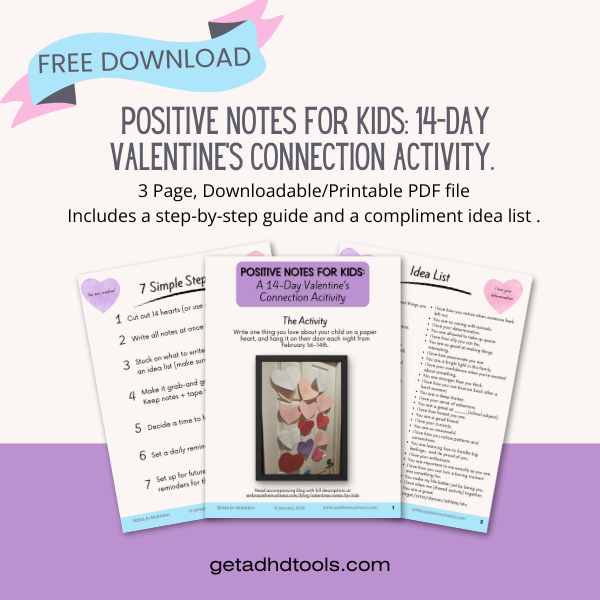
Want to give it a try? Download the Free 3-page printable version with the full steps plus an idea list of compliments to write on the hearts here: https://www.embracethemuchness.com/digital-downloads
Bobbi-Jo Molokken | ADHD Coach & Educator
Embrace the Muchness